
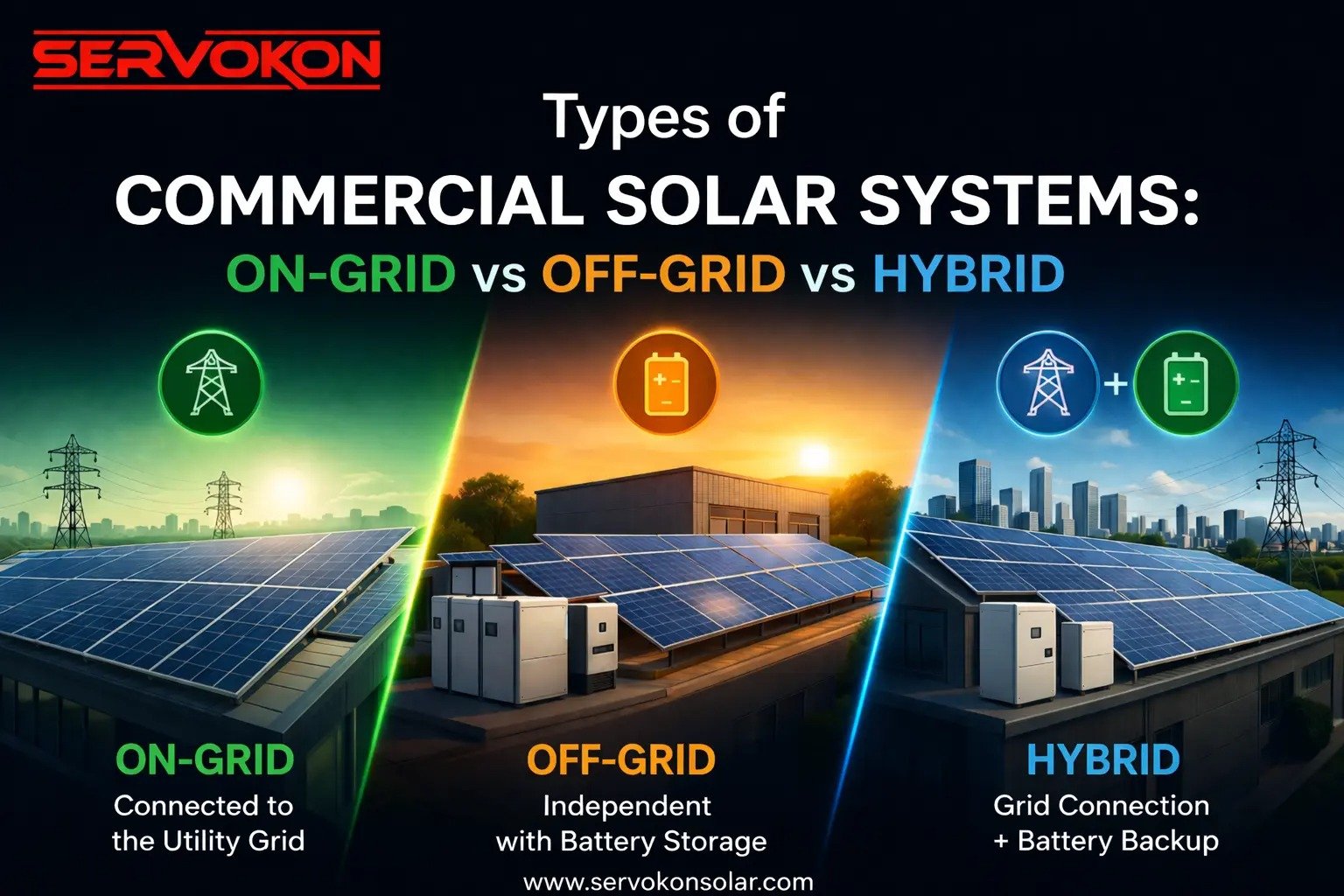
Businesses across India are steadily moving toward solar energy to reduce electricity costs and ensure long-term savings. With rising power demand and frequent tariff changes, many organizations are now exploring commercial solar plant installation services as a practical solution. Understanding the different types of solar systems is the first step before making an investment. Each system serves a different purpose depending on usage, location, and power availability.
What is a Commercial Solar System?
Commercial solar systems are designed to meet the electricity needs of industries, offices, factories, and large buildings. These systems are larger than residential setups and are built to handle higher energy consumption. Choosing the right type of system can help businesses reduce dependency on grid electricity and manage operational costs more efficiently. The three main types are on-grid, off-grid, and hybrid systems, each with its own advantages.
On-Grid Solar Systems
On-grid solar systems are connected directly to the local electricity grid. They generate power during the day and supply excess energy back to the grid, often through net metering. This type is ideal for businesses in urban areas where grid supply is stable. It helps reduce electricity bills without the need for battery storage, making it a cost-effective option for many commercial users.
Off-Grid Solar Systems
Off-grid solar systems operate independently of the electricity grid. They rely on battery storage to provide power even when sunlight is not available. These systems are suitable for remote locations where grid access is limited or unreliable. While the initial investment may be higher due to batteries, they offer complete energy independence and ensure uninterrupted operations in areas with frequent power cuts.
Hybrid Solar Systems
Hybrid solar systems combine the features of both on-grid and off-grid systems. They are connected to the grid but also include battery storage for backup. This makes them a flexible choice for businesses that want reliability along with savings. Hybrid systems are becoming popular in India as they allow users to store excess energy and use it during outages, ensuring smooth operations at all times.
Which system is right for you?
Choosing the right solar system depends on your business needs, location, and budget. If your area has a stable electricity supply, an on-grid system can help reduce costs. For locations with unreliable power, off-grid or hybrid systems offer better control and backup. It is always advisable to assess your energy usage and consult experts before making a decision that fits your long-term goals.
Conclusion
Switching to solar energy is a smart move for businesses looking to reduce costs and secure a stable power source. Understanding the difference between on-grid, off-grid, and hybrid systems helps in making the right choice. With the help of right brand like Servokon Solar, businesses can enjoy both savings and energy security for years to come. Our expertise in commercial solar plant installation services ensures reliable performance, proper system design, and long-term value for every customer.
FAQs (Frequently Asked Questions)
The best system depends on your location and power needs. On-grid works well in cities, while hybrid is ideal for areas with power cuts.
On-grid systems do not need batteries, but off-grid and hybrid systems use them for backup.
Savings depend on usage and system size, but many businesses see a noticeable reduction in electricity bills over time.
Yes, many states in India offer net metering, allowing businesses to send extra power back to the grid.
One must look for experience, product quality, and strong service support. Brands like Servokon Solar offer complete solutions for commercial needs.